
Insights for AI builders
Tutorials, product updates, and ideas to help you build and ship AI applications faster.
Subscribe via RSS
Selling AI Agent Setup Services: A Real Side Business Idea for 2025
Companies already pay for ChatGPT but barely use it. Here's how proactive AI agents like Dots create a practical consulting opportunity.

How to Run Kolibri-1 Locally: Aleph Alpha's German-English MoE Model
Kolibri-1 is Aleph Alpha's 78B MoE model with 3.46B active params. Here's what hardware you need and how to serve it with vLLM.

How to Use OpenAI Codex: Core Concepts Every Beginner Needs
A beginner's guide to OpenAI Codex covering projects, agents.md, the agent loop, and slash goals for non-coders getting started.

Codex Local vs Cloud: What Actually Happens to Your Files and Code
Codex can run against local files on your machine or in a cloud sandbox. Here's what that distinction actually means for how you work.

GPT-6.1 Sol Explained: OpenAI's Cheaper Model That Spares Your Limits
GPT-6.1 Sol matches Astra on many tasks at a fraction of the cost, easing ChatGPT plan limits. Here's what it means for heavy users.

GPT-6 Astra Hit OpenAI's Critical Cyber Risk Line. What That Means
GPT-6 Astra is the first OpenAI model to trigger its critical cybersecurity capability threshold. Here's what that safety classification actually means.

How to Learn Anything Faster With AI: A 9-Role Framework
A science-backed method for using AI as interviewer, mapmaker, Socratic questioner and examiner to learn skills faster through active recall.

Kolibri-1: Aleph Alpha's Open-Weight German-English MoE Model
Kolibri-1 is Aleph Alpha's 78B MoE model with 3.5B active params, 1M context, and Apache 2.0 license, built for German and English.

Kolibri-1 Benchmarks: How Aleph Alpha's Model Stacks Up
Kolibri-1's model card compares it to Qwen3.5, GLM-4.7 Flash and other MoE models. Here's what the specs and evaluation setup actually show.

OpenAI Dots: Pricing Tiers, Access, and Usage Limits Explained
OpenAI's Dots agent needs ChatGPT Pro starting at $100/month. Here's how the $100, $200, and $500 tiers differ on usage and access.

OpenAI's 80-90% GPT-7/GPT-8 Research Claim, Explained
An OpenAI exec said 80-90% of research targets GPT-7, GPT-8, and beyond. Here's what that claim does and doesn't mean for future releases.

OpenAI Spaces and Pages: ChatGPT's Answer to Microsoft Copilot
OpenAI's Spaces and Pages bring shared, editable documents into ChatGPT, letting teams and AI agents work together in one thread.

Pi 1.0's Code Mode: How Native MCP and Model Routing Actually Work
Pi 1.0 adds native MCP via code mode, custom model routing, deferred tool loading, and Pi Durable for long-running agent sessions.

Pi Coding Agent Pricing: Is It Really Free to Use?
Pi and Pi Durable are MIT-licensed and free, but model API calls, routing, and classifiers still bill you. Here's the real cost picture.

Pi Durable: What It Is and Why It Matters for Agent Apps
Pi Durable adds crash-resumable, multi-conversation state to AI agent apps. Here's how its checkpointing and storage model actually work.

How to Run Kolibri-1 Locally: VRAM and Hardware Requirements
Kolibri-1 needs roughly 78GB of FP8 weights and multi-GPU setups to serve. Here's the full vLLM, VRAM, and hardware guide.

Unbroker: Remove Your Data From Brokers Free With Hermes Agent
Unbroker is a free, local Hermes agent skill that automates opt-out requests across 50+ data broker sites. Here's how it works and its limits.
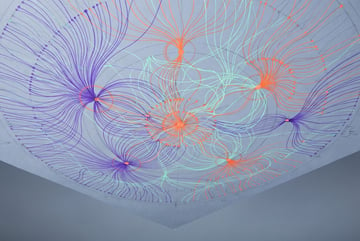
Beyond GPUs: Can Optical and Neuromorphic Chips Replace Backprop?
GPUs are hitting efficiency limits for AI. Here's why researchers are exploring optical computing, neuromorphic chips, and gradient-free training instead.

How to Use ChatGPT Dots as an Always-On AI Assistant
A practical guide to setting up ChatGPT Dots for proactive email monitoring, Slack alerts, and recurring research tasks.

ChatGPT Dots vs Meta Muse vs Grok: Which Always-On AI Assistant Wins?
ChatGPT Dots, Meta Muse, and Grok's assistant all promise always-on help. Here's how they compare on capability, connectors, and price.

How to Install and Build Claude Code Mods: A Setup Guide
Learn how Claude Code's new mods system works and how to install five practical examples for context tracking, UI, and workflow automation.

Claude Sonnet 5.5 Pricing vs Opus 5.5: Is Cheaper Actually Cheaper?
Sonnet 5.5 looks cheaper per token than Opus 5.5, but run it at max effort and the cost-per-task math flips. Here's why.

DeepSeek Harness 2.0 Desktop App: A Hands-On Guide for Coding Agents
How to install and use DeepSeek Harness 2.0's desktop app for coding agents, covering setup, plugins, creator mode, and scheduled automation.
DeepSeek Harness Pricing: What You Actually Pay to Run V4.1 Flash
DeepSeek Harness itself is free and open source, but running it still costs money through API usage. Here's how that billing actually works.