
Insights for AI builders
Tutorials, product updates, and ideas to help you build and ship AI applications faster.
Subscribe via RSS
How Javi Lopez Made a 17-Minute AI Backrooms Film Alone
Magnific co-founder Javi Lopez spent six months and 12 hours of generations on a solo AI backrooms film. Here's what he learned.

Why Is Google Bidding $10 Million for Spirit Airlines' Emails?
Google's $10M bid for Spirit Airlines' old emails and Teams data shows how AI labs are buying corporate archives to train agents on knowledge work.

Anthropic Cut 80% of Claude Code's Prompt. Here's How to Trim Yours
Anthropic removed most of Claude Code's system prompt with no performance loss. Here's how to audit and trim your own CLAUDE.md and skills.

Cisco's Jeetu Patel on AI Infrastructure, Rogue Agents, and Security
Cisco's Jeetu Patel explains the company's pivot to AI infrastructure, the risk of rogue agents, and why Cisco made AI adoption mandatory.

Claude Haiku 5.5 vs Sonnet and Opus 5.5: Which Should You Actually Use?
A hands-on cost and quality comparison of Claude Haiku 5.5 against Sonnet and Opus 5.5 across games, websites, and accounting tasks.

Why Did Figure Melt Its Old Robots in Molten Steel?
Figure sent retired Figure 02 robots into a 75-ton furnace in a Terminator 2 style film. Here's the IP logic behind the stunt.

How to Fine-Tune EmbeddingGemma on Your Own Data With LoRA
A practical guide to fine-tuning EmbeddingGemma with LoRA for custom retrieval, covering training pairs, negative sampling, and pitfalls.

Google Stitch 2.0: A Step-by-Step Guide to the Free AI Design Tool
How Google Stitch 2.0 turns a text prompt into prototypes, design systems, and code handoff, walked through screen by screen.

How to Connect Google Stitch to Coding Agents via MCP
Set up Stitch's MCP server so coding agents like Antigravity can list, read, and edit your Stitch design projects directly.
Google Stitch Pricing: Is It Free? Daily Credit Limits Explained
Google Stitch's free tier explained: how daily credits work, what resets at midnight UTC, and which parts of the workflow cost money later.

Grok Bot's New Model Routing: What Changed and How to Use It
Grok Bot now auto-routes tasks across Claude Opus 5.5, Midjourney, Suno and more, plus free native X search. Here's what to check now.

How to Build a Fast Browser Agent with Jev and Claude Code
A practical guide to building a fast browser automation agent using Jev's judgment model, Playwright or Jev Ultrafast, and Claude Code.

How to Make Viral AI Video Intros With Seedance 2.5 and Runway
A step-by-step workflow for building surprising AI video intros using Runway's keyframe mode, Seedance 2.5, and ChatGPT prompting.

What Is Jev? The Judgment Model Making Browser Agents Fast
Jev is a cheap, instant judgment model that speeds up browser agents by classifying page elements instead of reasoning through them.

Magnific Pricing and Access: What the AI Image Platform Includes
A look at what Magnific's all-in-one AI image and video platform offers, from its brand-consistent art direction model to image-to-3D tools.

Microsoft MAI Voice and Transcribe: Pricing, Speed, Latency Breakdown
Microsoft's MAI Transcribe 2 and MAI Voice 2.1 models promise real-time speech at 54 cents per hour. Here's what the numbers actually mean.

Microsoft's Hybrid Intelligence: How Windows Routes AI Between Local and Cloud
Microsoft's new Windows routing system decides whether coding agent tasks run locally or in the cloud, using on-device models.

OpenAI Dots: What the New Always-On Personal Agents Actually Do
OpenAI's Dots run continuously in the background with their own cloud computer, browser, and app access. Here's what they do and how the launch went.

OpenAI's Math Proofs Spark a Mathematician Backlash
OpenAI's AI-generated proof of the unique games conjecture stunned mathematicians and sparked a "human mathematics" backlash movement.
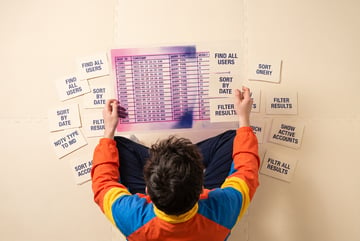
PG-Jev: Query Postgres in Plain English With a Decision Model
PG-Jev lets you filter, rank, and classify Postgres rows using plain English inside SQL. Here's how it works and how to install it.

RTX Spark and Surface Laptop Ultra: Pricing and Specs Explained
Microsoft's RTX Spark-powered Surface laptops start around $2,600, with up to 128GB unified memory for running local AI models.

How to Run Claude Code and Codex Inside Grok Bot's Terminal
Step-by-step guide to installing and authenticating Claude Code or Codex CLI inside Grok Bot's always-on cloud terminal for 24/7 agent access.
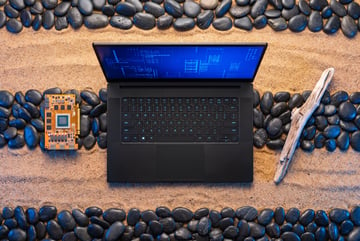
Microsoft Brings Llama.cpp to Windows: Run DeepSeek Locally on RTX
Microsoft is adding llama.cpp to Windows ML, letting quantized DeepSeek and Microsoft AI Code models run locally on RTX hardware.

How to Run Humanizer 12B Locally with Llama.cpp
Run Humanizer 12B offline with llama.cpp. GGUF quant sizes, VRAM needs, and what this Gemma fine-tune actually does to AI text.