
Insights for AI builders
Tutorials, product updates, and ideas to help you build and ship AI applications faster.
Subscribe via RSS
How to Set Up an AI Daily Brief With Grok Bot or ChatGPT
A practical guide to building a daily brief agent with Grok Bot, ChatGPT dots, and connectors like Apify, based on real workflows.

Black October: Inside the AI-Driven Cyberattack Wave Hitting the Web
A PHP flaw, a Railway breach, and bank account intrusions: how autonomous AI agents turned October into a cybersecurity reckoning.

What Is Role Engineering? Managing AI Agents Like New Hires
Role engineering replaces prompt engineering: give AI agents goals, context, and examples like onboarding staff, not scripting instructions.
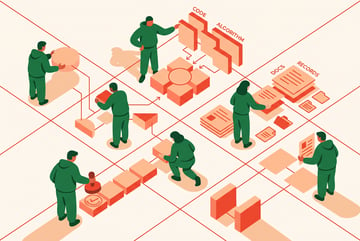
How to Scale an AI Software Factory With Port's Governance Layer
How to govern a scaled AI software factory using Port's skill registry, agent registry, context lake, and scorecards for enterprise reliability.

Claude Duet: What Anthropic's Proactive AI Assistant Actually Does
Anthropic's Claude Duet proactively flags tasks, pulls data from your tools, and drafts messages for you. Here's how it works and who can get it.

Claude Duet vs Muse, Grok Bot, and Dots: Which AI Agent Fits You?
A hands-on comparison of Claude Duet, Meta Muse, xAI Grok Bot, and OpenAI Dots to find the always-on AI agent that fits your workflow.

Claude Opus 5.5 Workflow: Five Habits for Long-Running Coding Agents
A practical workflow for Claude Opus 5.5 long tasks: simple prompts, benchmarks, tests, design references, and multi-agent orchestration.

How Much Does Running Claude AI Agents Really Cost?
A breakdown of what drives Claude agent token spend, plus prompt caching, batch APIs, and model-matching tactics to keep autonomous sessions affordable.

Kimi K3.1 Pro: What It Can Actually Build in Blender, Unreal, and CAD
Kimi K3.1 Pro claims strong 3D and coding skills in Blender, Unreal, and CAD. Here's what its real demos show, pass and fail.

Kimi K3.1 Pro Benchmarks: Does It Really Beat GPT-6 Astra?
Kimi K3.1 Pro claims to beat Opus 5.5 and GPT-6 Astra on paper. Independent tests tell a more complicated, cheaper story.

Is Kimi K3.1 Pro Distilled From Claude or GPT? The Evidence So Far
Moonshot's Kimi K3.1 Pro beats top US models on paper. Here's why some suspect distillation, and what's actually verifiable.

Kimi K3.1 Pro Pricing: How It Stacks Up Against Opus 5.5 and GPT-6 Astra
Kimi K3.1 Pro's API pricing runs $2 input/$10 output per million tokens, far below Opus 5.5 and GPT-6 Astra. Here's the real cost picture.
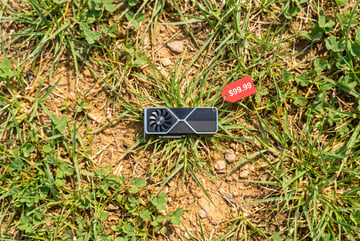
Is Local AI Worth It? The Cost Math vs ChatGPT and Claude
Local AI hardware costs thousands upfront yet often underperforms ChatGPT and Claude subscriptions. Here's the honest cost and speed breakdown.

OpenAI's 28-Day Codex Streak: Caching, Edit History, and Locked Chats
OpenAI's 28-day Codex and Work shipping streak continues with caching upgrades, message editing, locked chats, and a wider Decisions API rollout.

Perplexity Computer on Mac: What We Actually Know So Far
Claims about running Perplexity Computer locally on Mac hardware are circulating, but verifiable technical details remain thin. Here's the honest state.

Raon-1 Mini Benchmarks: How KRAFTON's MoE Model Stacks Up
Raon-1 mini's AIME, GPQA Diamond, and IFBench scores compared against Qwen3.6-35B, Gemma 4 26B, and other MoE models its size.

What Is the Eureka Machine? Inside Recursive AI's Self-Improving Builder
Recursive AI used an automated research loop called the Eureka Machine to design Flint's architecture, quantization, and GPU kernels.

Recursive Flint Benchmarks: SWE-bench and Terminal-Bench Scores Explained
Flint scores 74.2% on SWE-bench Verified and 89.7% on SWE-bench Pro v2. Here's what those coding agent benchmarks measure and why.

Recursive Flint's SWE-bench and Terminal-Bench Scores, Explained
Recursive Flint hits 89.7% on SWE-bench Pro v2 and 54.9% on Terminal-Bench 2.1. Here's what those numbers mean for a 40B open coding model.

Spark-X2.6-4B Benchmarks: How It Stacks Up Against Qwen3.5 and Gemma
Spark-X2.6-4B is a 4B on-device model claiming to match 9B models on coding and agent tasks. Here's what the benchmarks actually show.
Who Is Local AI Actually For? The Honest Tradeoffs Explained
Local AI promises data control and independence from the cloud, but the hardware cost, setup time, and speed tradeoffs mean it's not for everyone yet.

AI-Coordinated Cyberattacks Are Hitting Banks and Infrastructure at Scale
Swarms of AI agents are reportedly probing banks and industrial systems at once, raising hard questions about internet security in 2026.

How AI Interpretability Could Reshape Everyday Products by 2027
Interpretability research is turning AI from a black box into something readable. Here's how that could change law, health, finance, and apps by 2027.

How to Make Your AI-Generated Website Not Look Vibecoded
AI landing pages often look the same. Here's how founders can use AI design tools without producing generic, low-converting sites.